Getting lost in the souks is one of the great experiences of a trip to Marrakech. North of Jemaa el-Fna square, hundreds of stalls line a maze of covered alleys, each one specialised in a craft. Here is our guide to the souks of Marrakech: what to buy, where to find it and how to haggle without stress.
How the souks are organised
The main artery is Souk Semmarine, which runs north from Jemaa el-Fna. From there branch out specialised souks inherited from the old guilds:
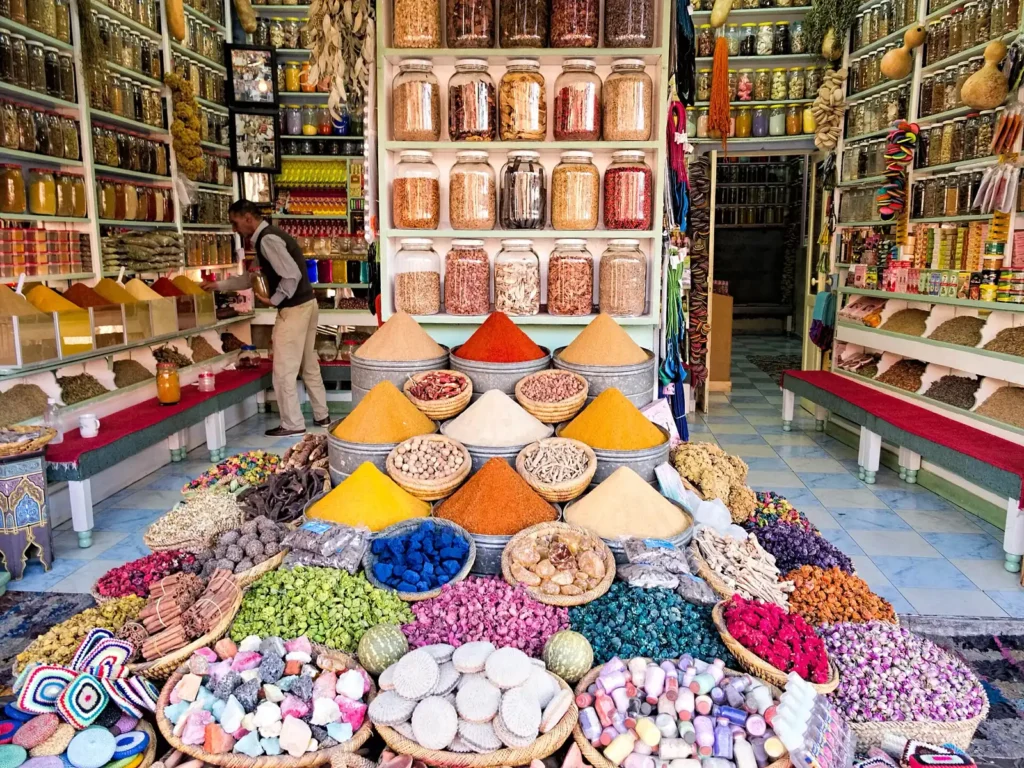
- Souk el-Attarine: spices, perfumes and beauty products.
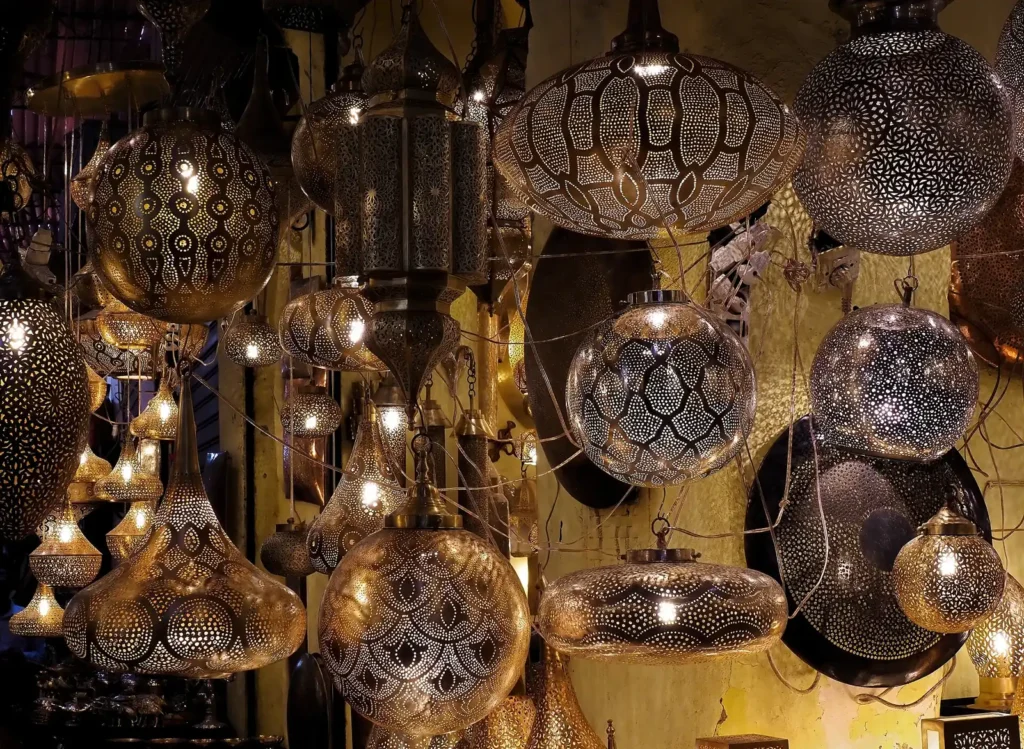
- Souk Haddadine: blacksmiths, lanterns and wrought-iron items.
- Souk Cherratine: leather, bags, belts and poufs.
- The dyers’ souk: skeins of dyed wool drying above the alleys.
- Rahba Kedima: the square of spices, baskets and medicinal plants.
- La Criée Berbère: once a slave market, today the carpet quarter.
What to buy in Marrakech
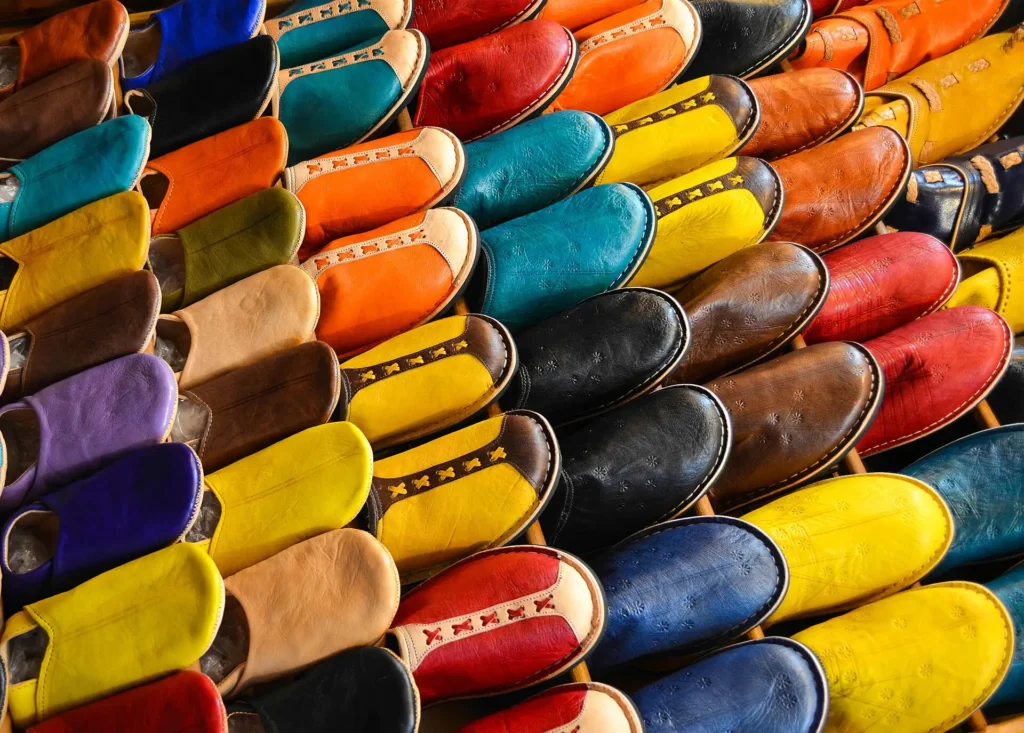
- Babouches: leather slippers in every colour, the most popular souvenir.
- Lanterns in pierced metal or coloured glass, which cast beautiful shadows.
- Berber rugs: white wool Beni Ourain, woven kilims, vintage carpets… Take your time to compare.
- Spices: ras el-hanout, cumin, saffron (beware of prices that look too low), sold by weight.
- Argan oil, culinary or cosmetic: preferably buy it from a women’s cooperative.
- Ceramics and tagine dishes, thuya wood objects, black soap and ghassoul clay for the hammam.
How to haggle
In the souks, bargaining is part of the game and is always done with a smile.
- Check prices in several shops before buying.
- Set yourself a maximum budget for the item you like.
- Let the seller name a price, then offer much less; you often meet around half to two thirds of the first price.
- Stay friendly and take your time, often over a glass of tea.
- Feel free to walk away with a thank you: that is often when the best price appears.
Prefer fixed prices? The Ensemble Artisanal on Avenue Mohammed V brings together artisans working on site, with marked prices: ideal to get an idea before heading into the souks.
Our practical tips
- The souks open around 9-10 am and close in the evening; on Friday at midday, many shops close for prayer.
- Carry cash in dirhams: small stalls do not always take cards.
- Politely decline improvised “guides” offering to show you the way: with an official guide, you visit workshops without pressure to buy.
- Take a break on a terrace overlooking Jemaa el-Fna, or discover the mint tea ceremony.
- In the evening, the square becomes an open-air restaurant: see our Jemaa el-Fna street food.
To plan your stay, read our 3-day Marrakech itinerary and our day trips from Marrakech. Our local guides can take you through the souks on request: contact us.